




Heat pumps are one of the most important components in a LZE home and are capable of fulfilling the entirety of a home’s heating and cooling needs. Unlike furnaces, heat pumps don’t burn fuel to create heat. Instead, they transfer heat from one place to another (usually between an indoor and outdoor unit) using a refrigerant cycle. LZE homes most commonly utilize air source or ground source heat pumps, but dual-fuel heat pumps can also satisfy LZE home certification requirements.
Air Source Heat Pumps
According to the Department of Energy, a properly installed air-source heat pump can deliver up to two to four times more heat energy to a home than the electrical energy it consumes. An air source heat pump’s refrigeration system includes a compressor and two copper or aluminum coils (one indoors and one outside) with aluminum fins to aid heat transfer. In heating mode, heat is extracted from the outdoor air and brought into the house via a compressor circulating refrigerant. A reversing valve changes the direction of refrigerant flow for cooling and for the winter defrost cycle. In warmer months, heat is extracted from the home and rejected outdoors.
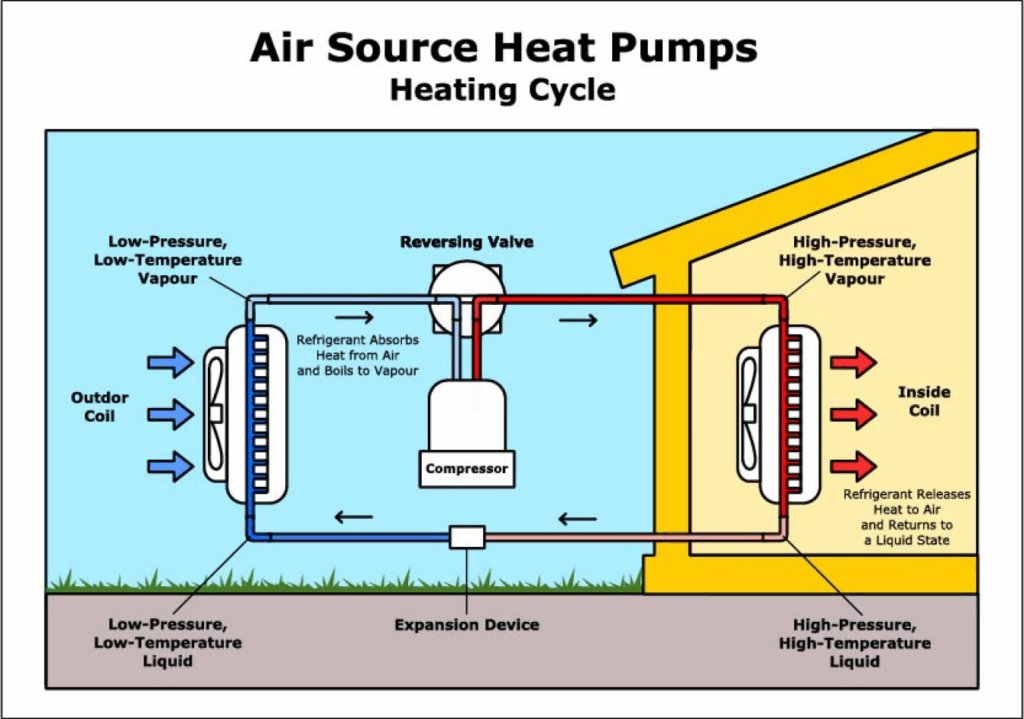
Figure 1: An air source heat pump’s heating cycle, sourced from the Department of Energy.
Air source heat pumps are available in multiple different configurations, which can be tailored to suit specific home layouts, preferences, and heating and cooling needs. Here’s an overview of air source heat pump system options, taken from the Department of Energy:
- Ductless vs. Ducted vs. Short-Run Ducted:
Ductless Systems: Require minimal construction and are ideal for additions, studio apartments, or smaller homes. They avoid ductwork efficiency losses but lack high efficiency MERV (Minimum Efficiency Reporting Value) air filtration or the ability to add ventilation.
Ducted Systems: Use existing ductwork and are ideal for homes with a ducted heating or cooling system.
Short-Run Ducted: Use traditional ductwork in a small section of the house, often complemented by ductless units.
- Split vs. Packaged:
Split Systems: Have one coil and fan inside and one outside. Supply and return ducts connect to the indoor central coil and fan.
Packaged Systems: Contain all components in one outdoor unit. Heated or cooled air is delivered via ductwork passing through a wall or roof.
- Multi-Zone vs. Single-Zone:
Ducted Systems: Single-zone systems have one thermostat; multi-zone systems have motorized zone dampers and multiple thermostats.
Minisplit Systems: Single-zone systems have one outdoor condenser matched to one indoor head; multi-zone systems can connect multiple indoor heads to one outdoor condenser, allowing for individual room temperature control.
Ground Source Heat Pumps
Ground source heat pumps, also known as geothermal heat pumps, are among the most efficient and comfortable heating and cooling technologies currently available. They use the earth’s natural heat to provide heating, cooling, and often, water heating. A geothermal heat pump system includes:
An underground heat collector: A geothermal heat pump uses the earth as a heat source and sink (thermal storage), using a series of connected pipes buried in the ground near a building. The loop can be buried either vertically or horizontally. It circulates a fluid that absorbs or deposits heat to the surrounding soil, depending on whether the ambient (outside) air is colder or warmer than the soil.
A heat pump: When ambient temperatures are colder than the ground, a geothermal heat pump removes heat from the collector’s fluids, concentrates it, and transfers it to the building. When ambient temperatures are warmer than the ground, the heat pump removes heat from the building and deposits it underground.
A heat distribution subsystem: Conventional ductwork is generally used to distribute heated or cooled air from the geothermal heat pump throughout the building.

Figure 2: A diagram depicting the different types of underground heat collectors a ground-source heat pump can utilize, sourced from the Building America Solution Center.
Most ground-source heat pumps are also equipped with a desuperheater, which is an auxiliary heat-recovery system that can be connected to the home’s hot water tank to provide 25% to 50% of the home’s domestic hot water.
ENERGY STAR certified geothermal heat pumps use about 61% less energy than standard models, saving nearly $830 annually and more than $9,500 over the 15-year life of the product.
Dual-Fuel Heat Pumps
A dual-fuel heat pump system pairs an electric heat pump with a gas furnace. As outdoor temperatures change, the system alternates between the two fuel sources, supplementing air from the heat pump with heat from a gas or propane furnace
In a dual-fuel system, the system automatically switches between utilizing the heat pump and the furnace based on temperature. During the fall and spring when heating demands are lower, the system uses the more efficient heat pump to warm the air. During the coldest days of the year, the system shuts off the heat pump and relies on the gas furnace to meet the higher heating demands brought on by the colder temperatures. During the warm summer months, the furnace is inactive as the heat pump uses its refrigerant cycle to pull heat from the home’s inside air and transfer it outside.

Figure 3: A diagram of a dual-fuel heat pump system, sourced from Slipstream.
Heat Pump Resources
The Northeast Energy Efficiency Partnerships (NEEP) hosts a Cold Climate Air Source Heat Pump (ccASHP) Product List that includes ASHP systems that meet the latest version of the ccASHP Specification. The tool can also assist builders in sizing their heat pump unit.
 We would like to clarify that Utah Clean Energy is not a solar company. We are a nonprofit organization that advocates for solar and other clean energy technologies, but we do not install or sell solar in any way.